How to Choose a High Volume 3D Printer in 2026?
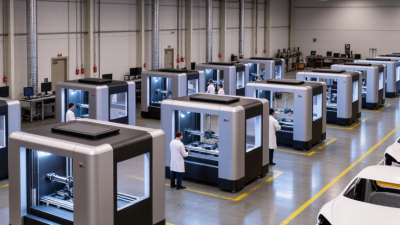
Choosing a high volume 3d printer in 2026 is no longer a simple capacity decision. Production teams must compare throughput, reliability, automation, material control, and total operating cost. A large build chamber may look impressive. It may still create expensive bottlenecks.
The Wohlers Report 2024 valued the global additive manufacturing industry at approximately $20.0 billion in 2023, following 13.5% growth. This expansion reflects wider industrial adoption, not just more desktop machines. AM Research also identifies production-oriented systems, software, and post-processing as important market growth areas. The message is clear: volume requires an entire workflow, not only a larger printer.
Scale changes everything. A suitable high volume 3d printer should maintain stable temperatures, repeatable layer quality, and predictable cycle times across long production runs. Its software should monitor failures, manage queues, and connect with existing manufacturing systems. Material compatibility matters too, especially for engineering polymers, metals, or certified production parts.
Buyers should calculate usable output per hour, not advertised build volume alone. Energy consumption, labor requirements, maintenance intervals, and failed-part rates can change the real business case. Small errors multiply. A machine that prints twice as many parts may also demand twice the finishing capacity. That uncomfortable detail is often missed.
This guide examines practical selection criteria for 2026, using industry reports, supplier specifications, and production-focused evaluation methods. Market forecasts can be imperfect. Actual performance depends on part geometry, materials, operators, and factory conditions. Careful testing remains essential before making a major investment.
Define High-Volume 3D Printing Needs and Production Goals
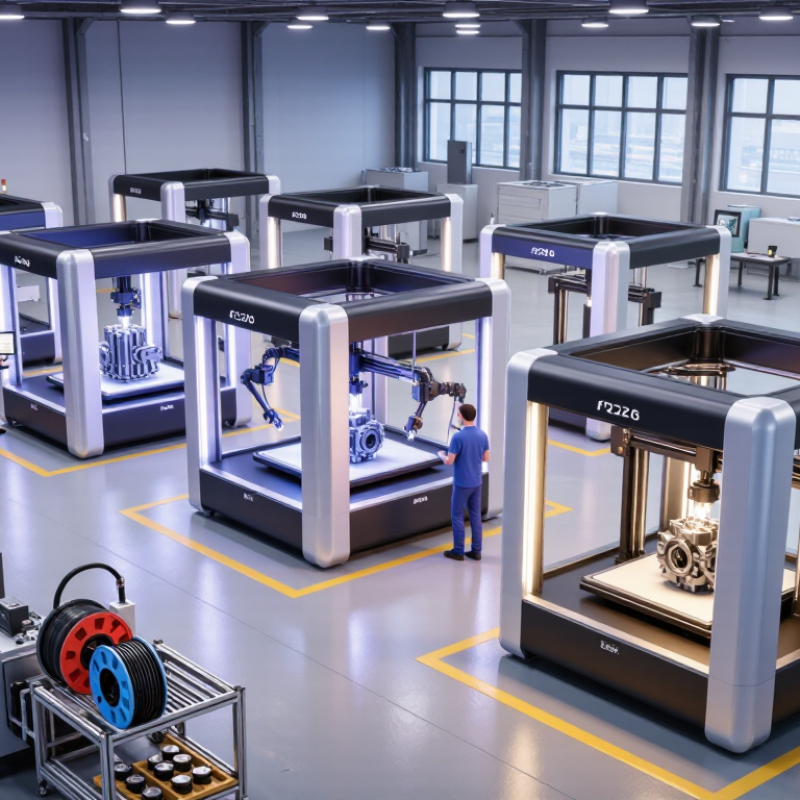
Choosing a high-volume 3D printer starts with production goals, not platform size. Define annual demand, batch frequency, part dimensions, materials, and tolerance requirements. Start with demand. A factory producing 8,000 housings needs different capacity than a studio producing 800 prototypes.
Wohlers Report 2024 valued the global additive manufacturing industry at $20.035 billion in 2023, with 13.5% year-over-year growth. This expansion does not guarantee profitable production. Calculate required parts per shift, usable build volume, changeover time, and expected uptime. Include failed prints and maintenance hours. The spreadsheet may lie. A claimed output of 100 parts per day means little if post-processing takes six hours.
Deloitte’s 2024 Smart Manufacturing Survey found that 86% of manufacturers expect smart manufacturing to become a key competitiveness driver within three years. Therefore, assess software connectivity, production monitoring, traceability, and operator workload alongside print speed. Request test parts using your actual geometry and material. Measure dimensional accuracy, surface finish, cycle time, and material waste. Keep a pilot period in the plan. Early calculations are often too optimistic. A smaller system with stable utilization may outperform a larger machine running below 40% capacity. Recheck the target after real production data arrives.
How to Choose a High Volume 3D Printer in 2026?
Define high-volume 3D printing needs and production goals before selecting equipment capacity.
This planning model estimates the number of printers required for different monthly production targets. It assumes 8 parts per print job, a 12-hour average cycle, 80% operational utilization, and 30 days per month. Actual requirements should be recalculated using validated cycle time, build yield, material changes, maintenance time, and quality-control losses.
Compare Printer Technologies, Materials, and Build Capacities
How to Choose a High Volume 3D Printer in 2026?
High-volume selection starts with throughput, not advertised speed. FFF suits low-cost thermoplastics, jigs, and large parts. Powder-bed systems support dense nesting, reducing empty chamber time. Resin processes deliver finer surfaces, but post-processing adds labor. The Wohlers Report 2025 valued the global additive manufacturing industry at $21.9 billion in 2024, with 9.1% growth. That growth signals demand, not proof that every technology scales well.
Compare materials by duty cycle. Nylon powder handles functional housings and repeated handling. Engineering filaments simplify some workflows, yet moisture can change strength and accuracy. Resins offer detail, but heat and ultraviolet exposure may limit service life. A 2023 U.S. Department of Energy manufacturing assessment reported material savings of up to 90% in suitable additive applications. The word is suitable. It matters.
Build capacity needs a real production model. Record part dimensions, nesting density, cooling time, cleaning steps, and operator minutes. A 600-millimeter chamber can underperform when thermal control is unstable. Check layer consistency across corners, filter intervals, powder refresh rules, and calibration records. I would test ten repeated parts, not one impressive sample. More honest. Capacity claims often ignore failed builds and post-processing queues. A spreadsheet can expose that uncomfortable gap before capital is committed.
How to Choose a High Volume 3D Printer in 2026? - Compare Printer Technologies, Materials, and Build Capacities
| Technology | Typical Build Capacity | Common Materials | Typical Throughput | Dimensional Accuracy | Best Production Uses | Main Trade-Offs |
|---|---|---|---|---|---|---|
| Industrial FFF/FDM | 300 × 300 × 300 mm to approximately 1,000 × 1,000 × 1,000 mm | PLA, ABS, ASA, PETG, nylon, PC, PEI, PEEK, carbon-fiber-filled polymers | Medium; generally about 20–150 cm³/h, depending on nozzle size and material | Typically ±0.1–0.3 mm or ±0.1%–0.3% of part size | Jigs, fixtures, tooling, prototypes, low-volume end-use parts, large-format components | Visible layer lines, anisotropic strength, support removal, and possible warping with high-temperature polymers |
| Pellet Extrusion | 500 × 500 × 500 mm to more than 2,000 × 2,000 × 2,000 mm | Thermoplastic pellets including recycled polymers, ABS, PLA, PETG, TPU, nylon, and filled compounds | High; approximately 0.5–20 kg/h is common for large-format systems | Typically ±0.5–1.5 mm, depending on part size, bead width, and thermal control | Large molds, patterns, architectural parts, composite tooling, and rapid production of oversized components | Lower surface resolution than filament systems, greater thermal management needs, and post-machining may be required |
| SLA / MSLA Resin Printing | 130 × 80 × 160 mm to approximately 700 × 700 × 400 mm | Standard, tough, flexible, castable, dental, high-temperature, and engineering photopolymer resins | Medium to high for batch production; productivity is largely determined by layer exposure and platform area | Typically ±0.05–0.2 mm for small parts | Detailed prototypes, visual models, dental parts, casting patterns, and small-to-medium batch production | Resin handling, washing and post-curing, limited outdoor durability for some materials, and support structures |
| Selective Laser Sintering (SLS) | 200 × 200 × 300 mm to approximately 750 × 550 × 550 mm | PA12, PA11, glass-filled nylon, aluminum-filled nylon, TPU, and other qualified polymer powders | High for nested batches; multiple parts can be packed into one build volume | Typically ±0.1–0.3 mm or ±0.05%–0.3% of part size | Functional housings, ducting, clips, orthotics, customized products, and complex parts without dedicated supports | Powder handling, cooling time, surface texture, powder refresh requirements, and higher equipment cost |
| Polymer Powder Bed Fusion | 250 × 250 × 300 mm to approximately 1,000 × 1,000 × 1,000 mm | Nylon, polypropylene, TPU, and other qualified thermoplastic powders | High; production rate improves substantially through dense part nesting | Typically ±0.1–0.3 mm, subject to material and thermal calibration | Repeatable batch manufacturing, customized products, lattice structures, and complex geometries | Thermal uniformity is critical; powder recovery, cooling, and depowdering add process time |
| Metal Powder Bed Fusion | 100 × 100 × 100 mm to approximately 500 × 500 × 500 mm | Stainless steel, tool steel, aluminum, titanium, nickel alloys, and cobalt-chrome | Low to medium; build time is commonly measured in hours or days for dense production batches | Typically ±0.05–0.2 mm before finishing, depending on geometry and process parameters | Aerospace, medical implants, tooling inserts, heat exchangers, and high-performance metal parts | High capital cost, inert-gas requirements, support removal, powder safety controls, and heat treatment |
| Binder Jetting | 200 × 200 × 200 mm to approximately 1,000 × 500 × 400 mm | Stainless steel, tool steel, iron-based alloys, sand, ceramics, and selected metal powders | High for batch production because deposition does not require a laser to melt each voxel | Typically ±0.1–0.5 mm before sintering-related shrinkage compensation | High-volume metal parts, sand molds and cores, decorative objects, and geometrically complex components | Debinding and sintering are required; shrinkage must be controlled and dimensional compensation is essential |
| Material Jetting | 300 × 200 × 150 mm to approximately 1,000 × 800 × 500 mm | Photopolymers, transparent resins, flexible materials, and multi-material combinations | Medium; suited to batch production of detailed parts rather than very large solid components | Typically ±0.05–0.1 mm for small and medium parts | Highly detailed prototypes, multi-material assemblies, medical models, and presentation-grade products | Material cost is high, some photopolymers age over time, and support material requires removal |
Evaluate Speed, Reliability, and Print Quality
Choosing a high-volume 3D printer in 2026 requires more than comparing advertised speed. Wohlers Report 2024 valued the global additive manufacturing industry at $20.035 billion in 2023, after 13.5% growth. That expansion increases pressure on production teams. However, faster motion can create more vibration, heat, and failed layers. I would not trust a headline speed number alone.
Test a printer with a realistic 300-millimeter production part. Measure total cycle time, not only the seconds spent printing. Record setup, cooling, support removal, and operator intervention. Reliability appears in quieter details: stable temperatures, repeatable first layers, and consistent nozzle flow. Track failed prints across at least 50 jobs. One failed overnight build can erase the savings from several fast cycles.
Print quality should be measured, not admired under bright lights. Check hole diameters, wall thickness, corner sharpness, and layer adhesion. ISO/ASTM 52900 provides common additive manufacturing terminology, helping teams document these tests consistently.
Review dimensional results from different areas of the build plate. Center and edge samples may behave differently. That matters.
A printer should also recover gracefully after a pause or material change. Ask for maintenance intervals, calibration records, and spare-part availability. These are practical reliability indicators.
Still, my own evaluation would remain cautious. Laboratory samples rarely represent dusty floors, long shifts, or rushed operators. A short pilot run is useful, but three months of production evidence is better.
Assess Automation, Software, Maintenance, and Operating Costs
A high-volume 3D printer should be judged by its complete production system, not its maximum build volume. The Wohlers Report 2024 valued the global additive manufacturing industry at $20.035 billion in 2023, with 13.5% annual growth. That expansion increases pressure on uptime, repeatability, and labor efficiency. Automation matters when operators can load materials, monitor prints, and remove parts with fewer manual interventions. Ask for documented cycle times, not attractive demonstrations.
Software deserves equal attention. A practical platform should manage queues, permissions, material tracking, failure alerts, and production records. Deloitte’s 2024 Smart Manufacturing Survey found that 86% of manufacturers expect smart manufacturing to become important for competitiveness within five years. Yet integration is often underestimated. A printer that cannot exchange data with existing planning or quality systems may create another isolated workstation. That is expensive.
Maintenance contracts should state response times, spare-part availability, calibration intervals, and remote-support limits. Track preventive labor, failed builds, consumables, electricity, and post-processing hours. The International Energy Agency reported that global data-centre electricity demand could more than double by 2026, reminding buyers that digital infrastructure also carries an operating cost. Energy use varies widely by process and facility, so request measured data under your planned workload. I would also test a difficult production job for several weeks. Short trials can hide nozzle wear, software friction, and cleaning time. My imperfect rule: calculate cost per accepted part, then challenge every assumption.
Verify Safety, Scalability, and Long-Term Manufacturer Support
How to Choose a High Volume 3D Printer in 2026?
High-volume printing demands more than a large build chamber. Safety, scalability, and support must be verified before purchase. The Wohlers Report 2024 valued the global additive manufacturing industry at $20.035 billion in 2023, after 13.5% growth. That expansion increases equipment choices, but it also increases evaluation risks.
Check ventilation, enclosure design, emergency stops, fire detection, and material-handling procedures. NIOSH recommends engineering controls, local exhaust ventilation, and suitable personal protective equipment for additive manufacturing work. Ask for measured noise, emissions, and thermal data, not general claims. A printer should also support repeatable calibration, remote monitoring, and modular maintenance. Otherwise, one failed sensor can stop a whole production cell. I would not trust a polished brochure alone.
Tips: Request a live production trial using your geometry and material. Track cycle time, failed parts, energy use, and operator intervention. Review ISO/ASTM 52900 terminology and require documented validation procedures. Ask how quickly critical parts ship, how long firmware remains supported, and whether technicians receive formal training. The 2024 Wohlers analysis shows continued industry growth, yet growth does not guarantee dependable after-sales service. A low purchase price can look attractive. It can also become expensive downtime. Build a written service-level agreement, even when the sales team says it is unnecessary.
Related Posts
-
Top 10 Large 3D Printers for Global Buyers
-
Why Choose a 3D Printer for Global Manufacturing?
-
Ultimate Guide to Finding the Best Professional 3D Printer for Your Business Needs
-
7 Digital Innovations Transforming the Professional 3D Printer Industry
-
What Is a 3D Printing Machine and How Does It Work?
-
Crafting Excellence with the Best Mini 3D Printer from China for Global Markets