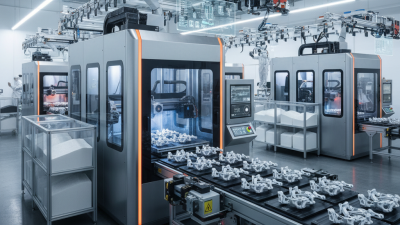
What Is a 3D Printing Machine and How Does It Work?

A 3d printing machine turns a digital design into a physical object, layer by layer. Unlike a traditional mill, it usually adds material instead of cutting it away. The process begins with a computer-aided design file. Slicing software divides that model into hundreds of thin sections. The machine then follows those instructions with controlled movements. As industry analyst Terry Wohlers explains, “3D printing is the process of making a physical object from a three-dimensional digital model.”

The machine’s operation depends on its printing technology. An FDM system pushes melted plastic through a heated nozzle. A resin printer cures liquid material with light. A powder-bed system selectively fuses fine particles with heat or energy. Each method creates different surfaces, strengths, costs, and maintenance requirements. Small details matter. A loose belt can distort corners. Damp filament can produce weak, rough layers. Poor bed adhesion may ruin an otherwise accurate design.

It is not magic.

Understanding a 3d printing machine also means recognizing its limits. Prints may need support structures, sanding, washing, curing, or heat treatment. Material choice affects durability and safety, especially for objects exposed to heat, pressure, or food contact. This guide examines the machine’s core parts, printing workflow, suitable materials, and common failures. Some explanations may appear overly simple at first. That is intentional. Real-world printing involves variables that a clean diagram cannot fully show. Experiences from workshops and production floors often challenge perfect-looking theory.
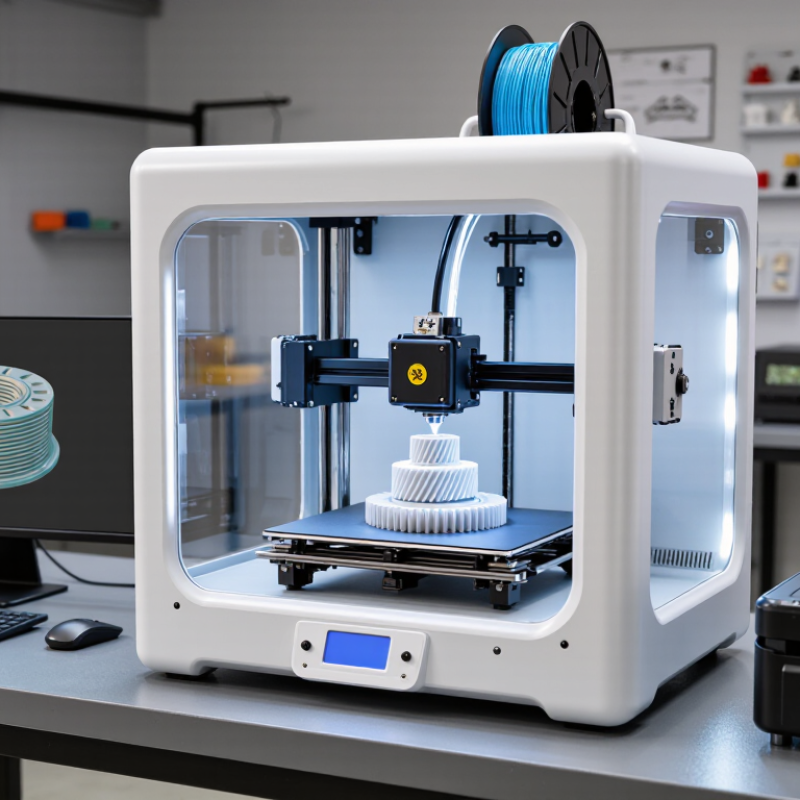
What Is a 3D Printing Machine and How Does It Work?

What Is a 3D Printing Machine?

What Is a 3D Printing Machine?

A 3D printing machine turns a digital three-dimensional model into a physical object. It builds material in controlled layers, rather than cutting an object from a solid block. The machine usually includes a build platform, motion system, material delivery unit, sensors, and control software. Common processes include material extrusion, vat photopolymerization, and powder bed fusion. Each process behaves differently. The Wohlers Report 2024 estimated global additive manufacturing revenues at $20.035 billion in 2023, including hardware, materials, software, and services.

The workflow begins with a CAD file, which slicing software converts into thin toolpaths. The printer then deposits, cures, or fuses material along those paths. A heated nozzle may lay down polymer filament. Another system may harden liquid resin with light. A powder-based machine selectively fuses fine particles using thermal energy. Layer height, temperature, exposure, and cooling affect strength and surface quality. Small errors matter. A warped corner can ruin an otherwise accurate part.

In practice, a 3D printer is not simply a faster photocopier. It is a coordinated manufacturing system requiring material knowledge and process control. ISO/ASTM 52900 defines additive manufacturing as joining material layer by layer from three-dimensional model data. That definition is precise, but incomplete for beginners. It does not show the operator checking supports, calibrating the platform, or removing trapped powder. NIST research emphasizes measurement, repeatability, and process monitoring because results can vary between builds. The machine makes the part. Judgment still shapes the result.

What Are the Main Parts of a 3D Printer?

A 3D printing machine builds objects layer by layer from digital design files. Its main parts work together with careful timing. The frame provides a rigid structure and reduces vibration during movement. A loose frame can create visible lines on the finished surface. The build platform supports each new layer. It must remain level and correctly spaced from the print head.

The print head usually contains an extruder, a heater, and a nozzle. The extruder pushes plastic filament through a heated path. The nozzle then deposits thin, controlled lines of material. Temperature affects flow, surface quality, and layer bonding. Too much heat may cause soft edges. Too little heat can produce weak layers.

I often check the first layer closely because small gaps reveal poor platform leveling. It is a simple check.

Stepper motors move the print head and platform along guide rails. Belts, screws, and bearings transfer that motion accurately. The control board reads movement instructions and manages motor speed, heating, and cooling. Sensors can detect temperature, platform position, or filament movement. A cooling fan hardens fresh material before the next layer arrives. The power supply delivers stable electricity to these systems. An enclosure may control drafts and temperature, but it can also trap heat. Not every printer needs one. Resin machines use a vat, a light source, and a lifting platform instead of filament parts. I still find printer failures difficult to predict; humidity, dust, and small mechanical changes can affect results.

How Does the 3D Printing Process Work?

How Does the 3D Printing Process Work?

A 3D printing process begins with a digital design, usually created in computer-aided design software. The model describes the object’s shape, dimensions, and internal structure. A slicing program then divides this model into hundreds of thin horizontal layers. It creates movement instructions for the printer, including speed, temperature, and material flow. I always inspect the sliced preview before printing. A hidden gap can become a serious failure.

The machine builds the object layer by layer. In material extrusion, a heated nozzle softens plastic and deposits narrow lines onto a build surface. Each line cools and bonds with the previous layer. Other systems use liquid resin or powdered material, but the basic idea remains similar: controlled layers form a three-dimensional object. The first layer matters greatly. If it does not adhere evenly, the entire print may shift, curl, or detach. Small adjustments can make a surprising difference.

During printing, supports may hold overhanging sections in place. Afterward, the operator removes supports, cleans the surface, and checks critical measurements with calipers. The result is not always perfect. Layer lines may remain visible, and thin walls can weaken unexpectedly. From practical testing, slower speeds often improve detail, but they also increase production time. This trade-off is easy to overlook. Careful calibration, suitable material, and realistic design choices make the process more reliable.

Which Materials Can 3D Printers Use?

A 3D printing machine creates objects layer by layer from digital designs. The material determines much of the final performance. Fused-filament printers commonly use PLA, ABS, PETG, nylon, and flexible TPU. PLA prints easily and produces sharp details. ABS tolerates higher temperatures, but it can warp without controlled conditions. Nylon offers toughness, although it absorbs moisture quickly.

Resin printers use liquid photopolymers. These materials capture fine textures, but some parts remain brittle after curing. Industrial systems may process metal powders, ceramics, carbon-filled polymers, or engineering-grade composites. Metal printing requires strict control of powder size, heat, and atmosphere. It is not simply “plastic printing at a higher temperature.”

The 2024 Wohlers Report valued the global additive manufacturing industry at 20.035 billion dollars in 2023, with 13.5% growth. Grand View Research’s 2024 analysis also forecasts double-digit expansion for 3D printing materials. These figures suggest wider material adoption, not universal suitability. Material labels can mislead. A “strong” filament may fail after repeated heat cycles or poor layer bonding.

In practical testing, moisture, nozzle temperature, cooling, and print direction can change results dramatically. Recycled materials may reduce waste, but their properties can vary between batches. That weakness deserves more attention. The right choice depends on strength, flexibility, temperature resistance, surface finish, cost, and the printer’s processing limits.

What Is a 3D Printing Machine and How Does It Work? - Which Materials Can 3D Printers Use?

General technical characteristics and material options for common additive manufacturing systems.
Category Item How It Works or Key Property Typical Range or Application
Machine Fundamentals Digital Model A 3D model is created or obtained digitally and exported in a format that slicing software can process. Common file formats include STL, OBJ, and 3MF.
Slicing Slicing software divides the model into thin layers and generates toolpaths, supports, and printing instructions. Layer height commonly ranges from about 0.05 to 0.5 mm, depending on the process.
Material Deposition or Curing The machine deposits, selectively cures, or fuses material one layer at a time according to the digital toolpath. The exact mechanism depends on the printing technology.
Layer Bonding Each new layer bonds to the previous layer through cooling, chemical curing, melting, or thermal fusion. Bond strength can vary by material, orientation, temperature, and process settings.
Post-Processing The finished part may require support removal, washing, curing, sanding, heat treatment, or surface finishing. Requirements depend on the printing method and selected material.
3D Printing Technologies Fused Filament Fabrication A heated nozzle melts thermoplastic filament and places it along programmed paths. Suitable for prototypes, educational models, fixtures, and functional plastic parts.
Vat Photopolymerization Light selectively cures liquid photopolymer resin into solid layers. Known for fine detail and smooth surfaces; parts normally need washing and additional curing.
Powder Bed Fusion A thermal energy source selectively fuses regions of a powder bed, layer by layer. Can produce complex geometries in polymers or metals, with unused powder often removed afterward.
Material Jetting Small droplets of build material are deposited and cured, typically with light. Useful for detailed models, smooth surfaces, and multi-material prototypes.
Binder Jetting A liquid binder selectively joins powder particles; additional curing or sintering may be required. Used with selected metal, ceramic, sand, and composite powder systems.
Materials PLA Thermoplastic A relatively easy-to-print biodegradable thermoplastic with low shrinkage and good visual detail. Typical nozzle temperature: about 180–230°C; common for models and prototypes.
ABS Thermoplastic A durable thermoplastic with better heat resistance than PLA but greater shrinkage and warping risk. Typical nozzle temperature: about 220–260°C; an enclosed build area is often beneficial.
PETG Thermoplastic Offers a balance of strength, toughness, chemical resistance, and relatively straightforward printing. Typical nozzle temperature: about 220–250°C; useful for brackets, containers, and functional parts.
Nylon or Polyamide Strong, tough, and wear-resistant, but hygroscopic and sensitive to moisture during printing. Often printed around 240–290°C; used for gears, hinges, and engineering components.
TPU and Other Flexible Polymers Elastomeric materials that can bend, stretch, and absorb impact. Used for seals, flexible covers, grips, and vibration-damping parts.
Photopolymer Resin Liquid resin hardens when exposed to a suitable light source; formulations may be rigid, flexible, tough, or castable. Used for miniatures, dental models, visual prototypes, and high-detail parts.
Metal Powder Metal particles are fused or bound and may require heat treatment, support removal, or sintering. Common applications include aerospace, medical, tooling, and industrial components.
Ceramic and Composite Materials Ceramic particles or fiber-filled polymers provide specialized thermal, stiffness, or appearance characteristics. Used for heat-resistant parts, artistic objects, tooling, and lightweight structural components.
Important Performance Factors Accuracy Dimensional accuracy is influenced by calibration, machine motion, thermal behavior, material shrinkage, and geometry. Fine-detail resin systems may achieve smaller features than many extrusion systems.
Build Speed Print time depends on part volume, layer height, infill, movement speed, curing exposure, and support structures. A larger or more detailed model generally requires more time.
Strength Direction Many printed parts are anisotropic, meaning strength can differ between the layer plane and the build direction. Part orientation and layer bonding should be considered for load-bearing designs.
Infill and Wall Structure Internal infill patterns and outer wall thickness affect weight, stiffness, print time, and material consumption. Lower infill reduces weight; thicker walls generally improve durability.
Temperature and Moisture Control Nozzle, build plate, chamber, resin, and material storage conditions affect adhesion and final quality. Moisture-sensitive filaments should be dried and stored in sealed conditions.

What Are the Main Applications of 3D Printing?

3D printing machines build objects layer by layer from digital design files. A heated nozzle may place melted polymer, while other systems cure liquid resin with light. The application determines the suitable method, material, and accuracy. In product development, engineers print hand-sized housings, clips, and ergonomic handles before ordering expensive molds. A prototype can reveal a sharp edge or awkward grip within one afternoon. That speed supports repeated testing, not careless production. Some designs still fail after printing.

Healthcare teams use printed anatomical models to prepare for complex procedures and explain conditions more clearly. Custom supports, dental guides, and selected prosthetic components can improve fit when professionals verify each measurement. Safety matters here. Printed parts must meet strict material and sterilization requirements. In schools, students use small machines to create gears, bridges, and moving joints. They learn geometry by watching a digital mistake become a physical one. The first print is often disappointing.

In manufacturing, 3D printing suits low-volume parts, replacement components, and lightweight structures with internal channels. It can reduce waste because material is added only where needed, although supports and failed prints still create scrap. Architects print scaled building models with staircases, windows, and shaded courtyards. Designers can inspect sunlight paths and spatial flow more directly than on a screen. I would not treat every printed object as production-ready. Surface strength, heat resistance, dimensional tolerance, and long-term wear require measured testing. A neat prototype can hide a weak layer bond.