What Are the Top Industrial Metal 3D Printers in 2026?
Choosing the right industrial metal 3d printer in 2026 requires more than comparing build volume or marketing claims. Industrial buyers must examine production evidence, material compatibility, process stability, and long-term operating costs. A machine that prints titanium brackets quickly may struggle with stainless steel repeatability or complex internal channels.
This guide examines leading systems across laser powder bed fusion, electron beam melting, and directed energy deposition. It considers practical details, including layer consistency, powder handling, chamber design, software controls, and post-processing requirements. These factors affect whether a printer performs reliably beside a production line, not only inside a showroom.
Real experience matters.
The strongest evaluations combine manufacturer specifications with independent testing, service records, and user feedback. Certification pathways, operator training, spare-part access, and inspection tools also deserve attention. A low purchase price can become expensive when calibration takes hours or qualified technicians are unavailable.
No single platform fits every factory. That remains easy to overlook. Aerospace suppliers may prioritize traceability and fatigue performance, while medical manufacturers may value fine detail and validated workflows. Automotive teams might focus on throughput, automation, and material efficiency. This introduction frames the comparison around those differences, helping readers judge which industrial metal 3d printer offers credible value for their application. Some performance data remains difficult to compare fairly, because vendors use different test geometries, settings, and reporting methods. That uncertainty should guide careful questions, not blind confidence.
Industrial Metal 3D Printing: Definition, Processes, and Core Technologies
Industrial Metal 3D Printing: Definition, Processes, and Core Technologies
Industrial metal 3D printing builds metal parts directly from digital designs, layer by layer. It supports complex channels, lightweight structures, and customized production. In 2026, the best systems are judged by repeatability, material control, automation, and inspection quality, not speed alone.
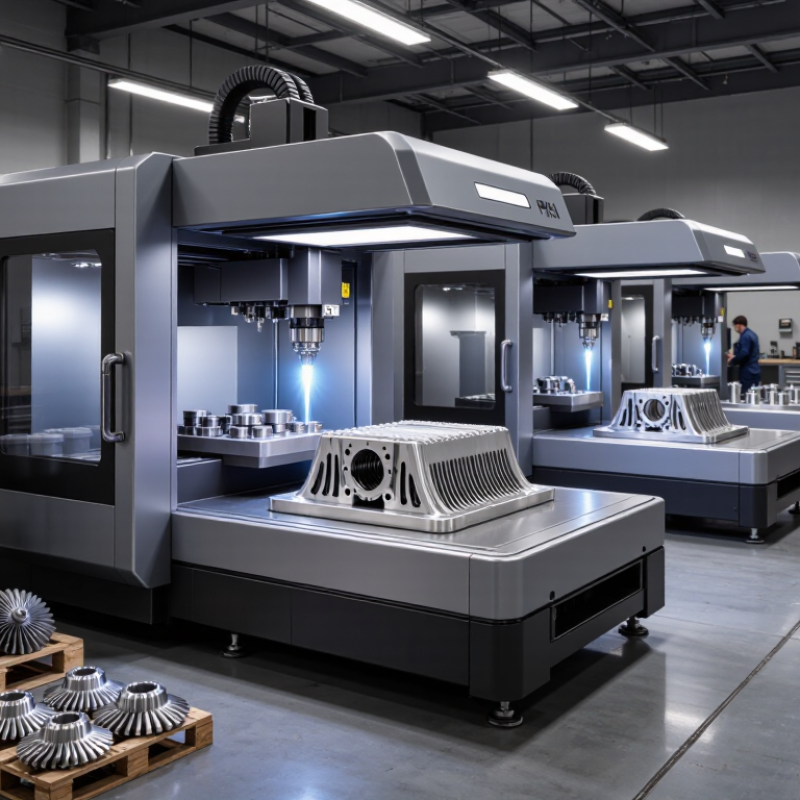
Powder bed fusion remains widely used for precise aerospace, medical, and tooling components. A laser or electron beam selectively melts thin powder layers inside a controlled chamber. Binder jetting deposits a liquid binder before debinding and sintering. It can produce many parts efficiently, although shrinkage requires careful process compensation. Directed energy deposition feeds powder or wire into a focused heat source. This method suits repairs, large components, and feature additions.
The core technologies extend beyond the heat source. Stable powder size, low oxygen levels, accurate recoating, and controlled thermal conditions strongly affect density and surface quality. Sensors can monitor melt-pool behavior, layer geometry, and chamber conditions during production. Post-processing may include stress relief, hot isostatic pressing, machining, and surface finishing. Operators should also verify dimensions using coordinate measurement or computed tomography. In practice, no machine is perfect. A clean build may still contain hidden distortion. That is why experienced teams qualify each material and geometry separately. Process records, powder reuse rules, calibration, and operator training make results more reliable. Performance claims still need independent testing.
The chart compares representative industrial layer thicknesses used by major metal additive manufacturing processes. Powder bed fusion generally provides finer resolution, while directed energy deposition builds larger features more quickly. Actual values vary according to alloy, machine configuration, powder characteristics, and production requirements.
Key Criteria for Comparing Industrial Metal 3D Printers in 2026
What Are the Top Industrial Metal 3D Printers in 2026?
Choosing top industrial metal 3D printers in 2026 requires more than comparing build volumes. In production reviews, I examine repeatability across three identical builds, not one successful sample. Layer thickness, beam stability, powder handling, and thermal control affect part density. Watch the melt pool. Small fluctuations can create pores, warped edges, or failed supports. A large chamber helps, but unused space does not improve a qualified component.
Material capability should be measured through verified process parameters, tensile data, fatigue results, and independent inspection records. Ask whether the data covers the exact alloy, orientation, and heat-treatment route. General material claims are weak evidence.
Dimensional accuracy matters too. Inspect thin walls, internal channels, and mating surfaces after removal and finishing. The printer should provide traceable logs for powder batches, oxygen levels, chamber temperature, alarms, and operator changes. This evidence supports quality audits and faster root-cause analysis.
Productivity must include setup, recoating, cooling, depowdering, post-processing, and maintenance. A fast exposure stage can still produce slow parts. Calculate cost per qualified component, not cost per printed hour. Automation reduces handling, yet it can hide mistakes when sensors are poorly calibrated. Safety systems, software permissions, service response, training, and spare-part access deserve equal attention. No scorecard is perfect. A pilot run with difficult geometries often reveals more than polished demonstrations. Record successful builds and rework; ignoring failures makes comparisons unreliable.
Leading Industrial Metal 3D Printer Systems and Their Main Strengths
Industrial metal 3D printers in 2026 are judged by production value, not headline speed. Leading systems combine stable melt control, accurate powder handling, and repeatable thermal management. Laser powder bed fusion remains strong for complex aerospace, medical, and tooling parts. It creates fine features and internal channels layer by layer. However, support removal can add hours.
Electron beam systems offer high build temperatures and reduced residual stress. They suit larger parts and heat-sensitive alloys, although surface finishes may need machining. Directed energy deposition repairs worn components and adds material to existing structures. Its main strength is flexibility, but dimensional accuracy is usually lower. Binder jetting can produce many parts efficiently. The trade-off is significant sintering shrinkage.
Real factory performance depends on more than the printer. Powder quality, calibration records, gas purity, and operator training matter daily. Very much. A reliable system should provide traceable settings, in-process monitoring, and clear maintenance procedures. Engineers should also examine build-envelope use, consumable costs, inspection methods, and software compatibility.
No platform wins every job. A machine that excels with thin lattice structures may struggle with large solid components. Some published cycle times also exclude post-processing. That detail can change the business case. Careful trials with the intended alloy and geometry remain essential before full production.
Material Options, Production Performance, and Quality Control
In 2026, the top industrial metal 3D printers are selected by material flexibility, production stability, and inspection depth. Industrial systems commonly process stainless steel, titanium, aluminum, tool steel, and nickel alloys. Each material demands different laser energy, scan speed, and heat control. Powder quality matters too. Particle size, moisture, and reuse history can change part density and surface finish. Experienced operators qualify each powder batch before production.
Production performance involves more than build speed. A large build chamber helps manufacturers nest more parts in one cycle. Stable thermal control reduces warping during tall builds. Automated recoating and in-process monitoring can limit downtime. However, impressive throughput figures may reflect ideal test conditions. Real factories face support removal, powder handling, machine cleaning, and occasional failed builds. These steps should be included in cost and delivery estimates.
Quality control begins before printing. Engineers should verify machine calibration, material certificates, and digital build files. During production, sensors can track melt-pool behavior, oxygen levels, and layer irregularities. After printing, dimensional scanning, density testing, surface measurements, and tensile coupons provide stronger evidence. Critical parts may require computed tomography or heat-treatment records. No printer removes every defect. Even a well-monitored build can need parameter refinement, which is an uncomfortable but necessary part of reliable industrial production.
Industrial Applications, Ownership Costs, and Selection Considerations
Choosing an industrial metal 3D printer in 2026 starts with the part, not the brochure. Powder-bed systems suit intricate aerospace brackets, dental tools, and compact heat exchangers. Directed-energy systems favor large repairs and near-net-shape components. Binder-based routes can support higher batch volumes, but debinding and sintering add process risk. The 2024 Wohlers Report valued the global additive manufacturing industry at $20.035 billion in 2023, up 13.5 percent. That growth signals adoption, not automatic profitability.
Ownership cost extends far beyond the machine invoice. Track powder or wire, inert gas, filters, recoater parts, calibration, software, labor, and post-processing. A build may finish overnight, then spend days in stress relief, machining, inspection, and certification. Facility changes matter too: ventilation, fire protection, powder handling, and stable power can reshape the budget. AM Research’s 2024 market analysis separates printer sales, materials, and services, revealing why machine price alone misleads. Use your own machine-hour and yield data. Small detail, large consequence.
Selection should follow measurable requirements: tensile strength, fatigue life, surface finish, envelope, throughput, and traceability. Request production samples, not only polished demonstrations. Review parameter control, monitoring records, maintenance response, and operator training. ISO/ASTM 52900 terminology and ISO/ASTM 52904 guidance improve comparisons between suppliers and sites. I would also price a failed build honestly. Powder recovery assumptions can be optimistic, and downtime estimates are often too neat. Leave room for learning.